
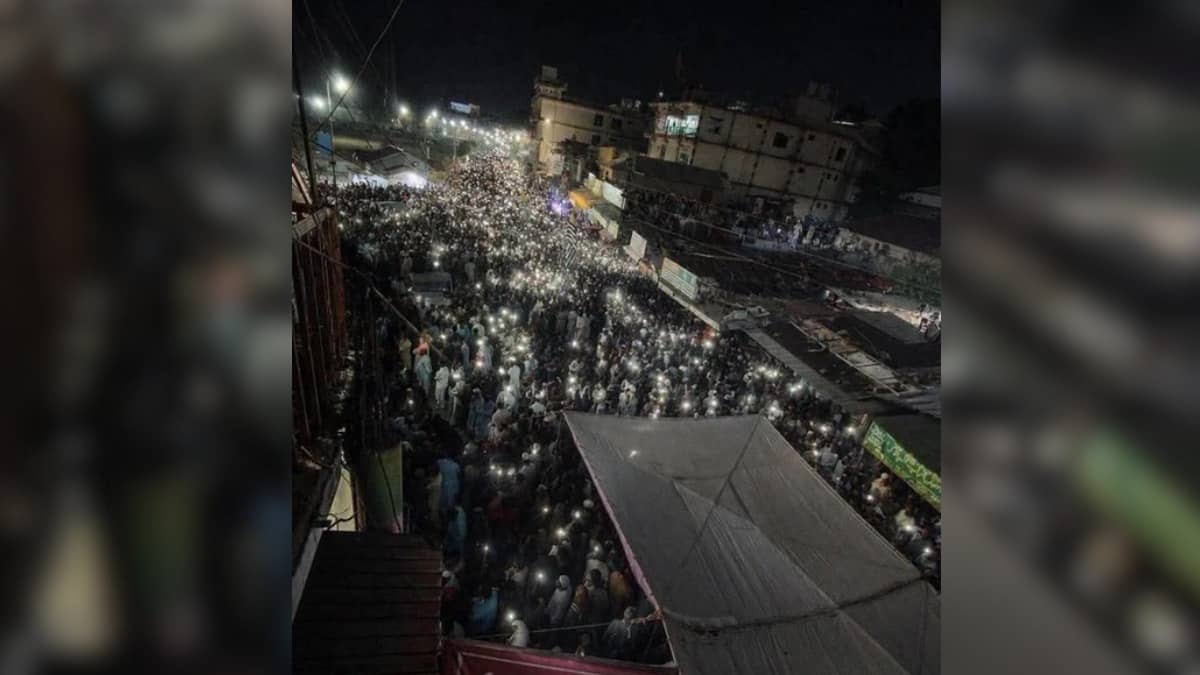
Security forces in Pakistan-occupied Kashmir (PoK) have increased their presence in the entire area, just days before the major shutdown on June 9. The strike, called by the Awami Action Committee (AAC), is due to the growing frustration of the local people over rising inflation, poor governance and long-standing political grievances.
To handle the situation, authorities have deployed Pakistan Army, Punjab Police and Rangers in many districts. The purpose of this shutdown is to directly protest against rising inflation, removal of reserved seats for refugees and Islamabad’s alleged failure to fulfill old promises made to the local people.
Tension reached its peak during a demonstration in Rawalakot on Sunday afternoon. AAC workers had gathered to raise slogans against the Pakistani government and army and demand immediate economic relief.
The peaceful protest turned violent when Pakistani Army soldiers and Rangers reportedly fired on the crowd. According to reports, four people were seriously injured in the firing and were immediately taken to the Combined Military Hospital (CMH) in Rawalakot for treatment. The confrontation has worsened an already tense atmosphere, where anti-government sentiments had been simmering for months.
Officials took strict security measures
Authorities began a crackdown over the weekend, in an attempt to prevent people from gathering ahead of the June 9 shutdown. Internet and digital communication services have been completely shut down across PoK since Friday night, leaving people cut off from the outside world.
Additionally, the government has taken direct legal action against movement leaders. According to reports, AAC has been declared a terrorist organization and its official headquarters has been sealed by Pakistani Rangers. Local critics say these heavy-handed measures are aimed at breaking up protest networks and preventing the exchange of information.
The violence escalated further on Saturday when security forces allegedly opened fire on the vehicle of AAC member Omar Nazir and one of his associates in Rawalakot. Nazir was seriously injured in this attack, while his companion died.
The current crisis is similar to the tragic incidents of protests in PoK last year. Even at that time, people took to the streets against severe economic difficulties and rising prices, but they had to face lethal force. Earlier reports confirm that at least 28 protesters were killed in those clashes. As the June 9 deadline approaches, the deployment of large numbers of military personnel and a complete communications blackout are creating conditions for a dangerous confrontation. This evolving situation will severely test the patience of the local protest movement as the government machinery refuses to hold accountable and enact structural reforms.