
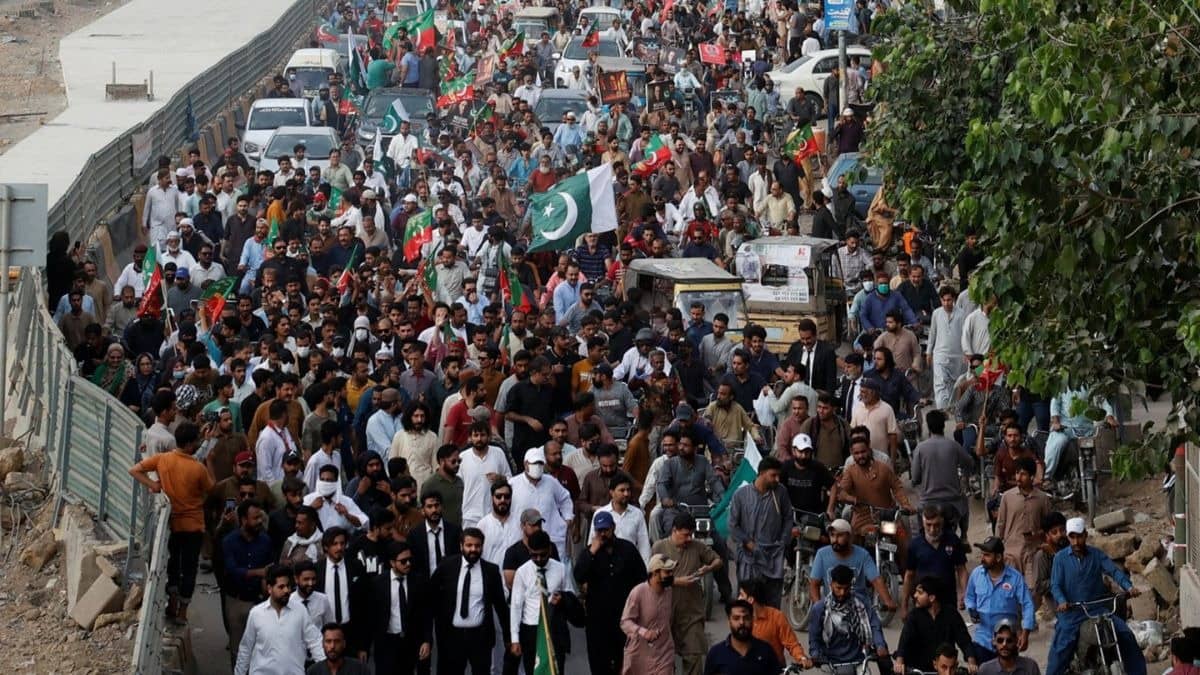
Pakistan Farmers Protest: These days, Pakistan is not only facing a serious economic crisis, but now the farmers there have also come out on the streets against the government. According to Pakistani media, on the occasion of ‘International Farmers’ Struggle Day’, farmers held massive protests in more than 100 cities of Pakistan on the call of ‘Pakistan Kisan Rabita Committee’ (PKRC). This anger of farmers against the alleged ‘anti-farmer’ policies of the Shahbaz government is an indication that the agricultural crisis in the country has now reached its peak.
What are the main demands of the farmers?
Farmers across Pakistan have in one voice demanded security of their livelihood and immediate reforms from the government. Their main demands are as follows:
Let us tell you, this protest of farmers is not limited to any one area, but has spread in all four provinces of Pakistan. In this, massive demonstrations took place in major agricultural centers of Punjab region like Lahore, Multan, Bahawalpur, Sahiwal and Sargodha. At the same time, farmers showed their strength in Hyderabad, Sukkur, Larkana and Thatta of Sindh. While in Khyber Pakhtunkhwa region, rallies were held in Peshawar, Swat, Abbottabad and Bannu. At the same time, Balochistan also did not remain untouched and farmers in Quetta, Mustang and Kalat also raised their voice against the government.
Government accused of being ‘anti-farmer’
Addressing the demonstration in Lahore, PKRC General Secretary Riffat Maqsood launched a scathing attack on the Shahbaz government. He said the last two years of the government’s tenure have been “extremely damaging” for farmers. He alleged that the government has completely neglected rural communities and small farmers and has given priority only to corporate interests.
Warning of more agitation in the coming days
Amidst the protests, farmer groups have warned that if the government does not seriously consider their demands and implement reforms, the movement could become more violent in the coming months. Pakistan’s farming community is already bearing the brunt of rising production costs, volatile crop prices and climate change. In such a situation, this movement has emerged as a big political and economic challenge for the Shahbaz government.