
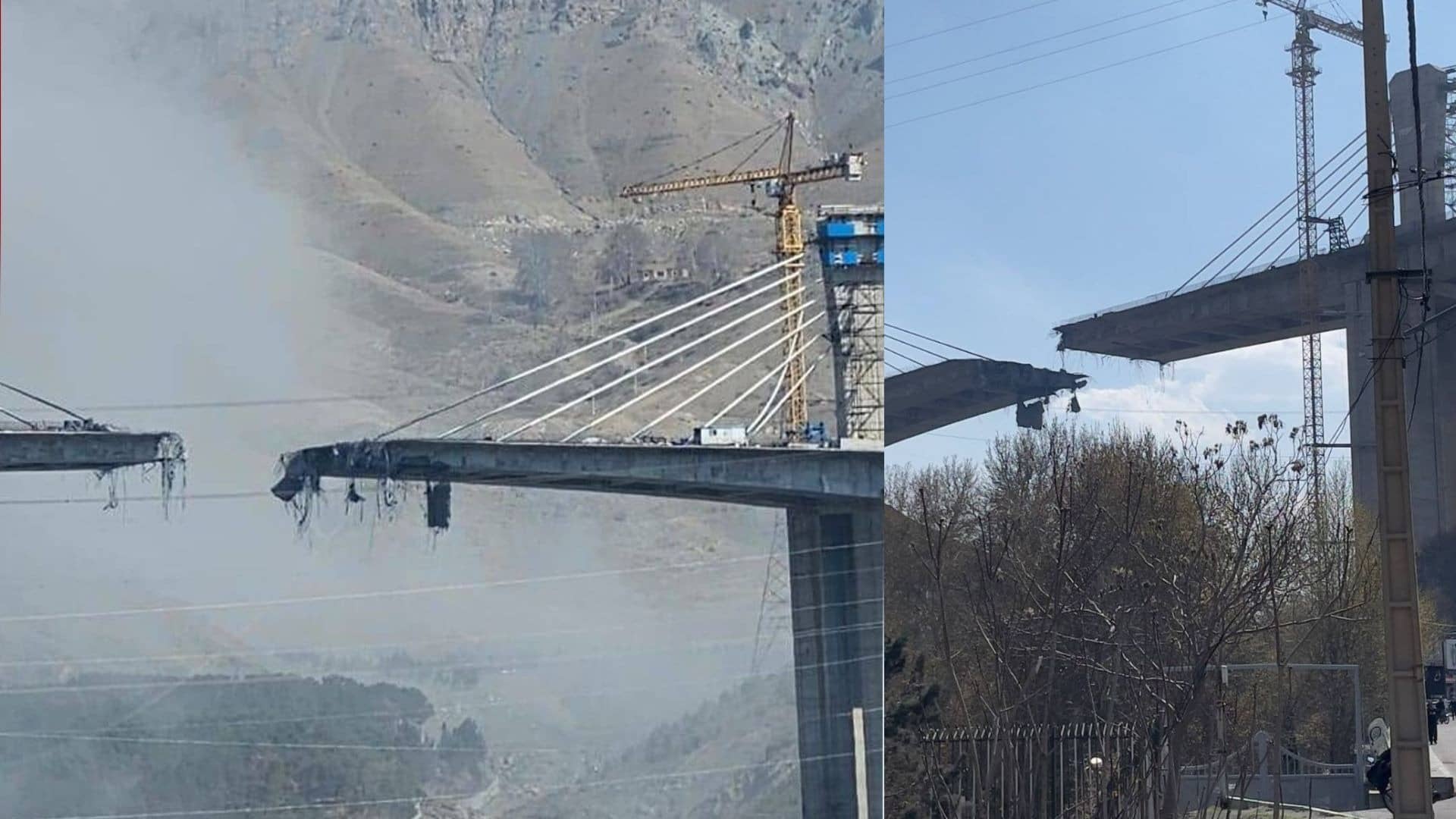
Tension has reached its peak in the Middle East. US and Israel targeted Iran’s most iconic infrastructure B1 Bridge in joint military action. This strategic bridge connecting Tehran and Karaj cities was broken in the middle in a precise airstrike on Tuesday night. Built at a cost of approximately 400 million dollars (about Rs 3,300 crore), this bridge was considered a symbol of Iran’s engineering capability, which has now been turned into a pile of debris.
This attack was so deadly and precise that the whole world is shocked. According to satellite imagery and initial reports, the main part of the bridge was completely destroyed, bringing traffic on the Tehran-Karaj Highway to a standstill. Iranian officials have called it a ‘cowardly attack of hostility’, while no official statement has yet come from Washington and Tel Aviv.
Deep wound on Iran’s chest
The strike took place in a suburban area of Tehran, considered one of the safest areas of Iran. The B1 Bridge was among the tallest bridges in the Middle East, with a total length of more than 1.5 kilometers. It took 7 years to build and was the greatest symbol of Iran’s economic progress. The attack not only leveled the bridge, but also caused huge damage to the surrounding infrastructure. Estimates are that repairs will take billions of dollars and months.
Electricity failure, many areas immersed in darkness
According to Iranian media, power supply was disrupted in Karaj and surrounding areas following the strike. Many important areas were plunged into darkness for hours, as the power grid station near the bridge was also affected. This created chaos in hospitals, factories and residential areas.
Strategic importance of the bridge
The B1 Bridge was considered not just a means of transportation, but the economic and military backbone of Iran. Lakhs of vehicles passed through it every day. It connected Tehran to the industrial center of Karaj. Due to its destruction the supply chain has been disrupted. Not only this, experts say that this bridge was a logistics hub for the Iranian Army. In case of war, the movement of troops, weapons and fuel depended on it. The aim of the attack appears to be to weaken Iran’s military mobility.