
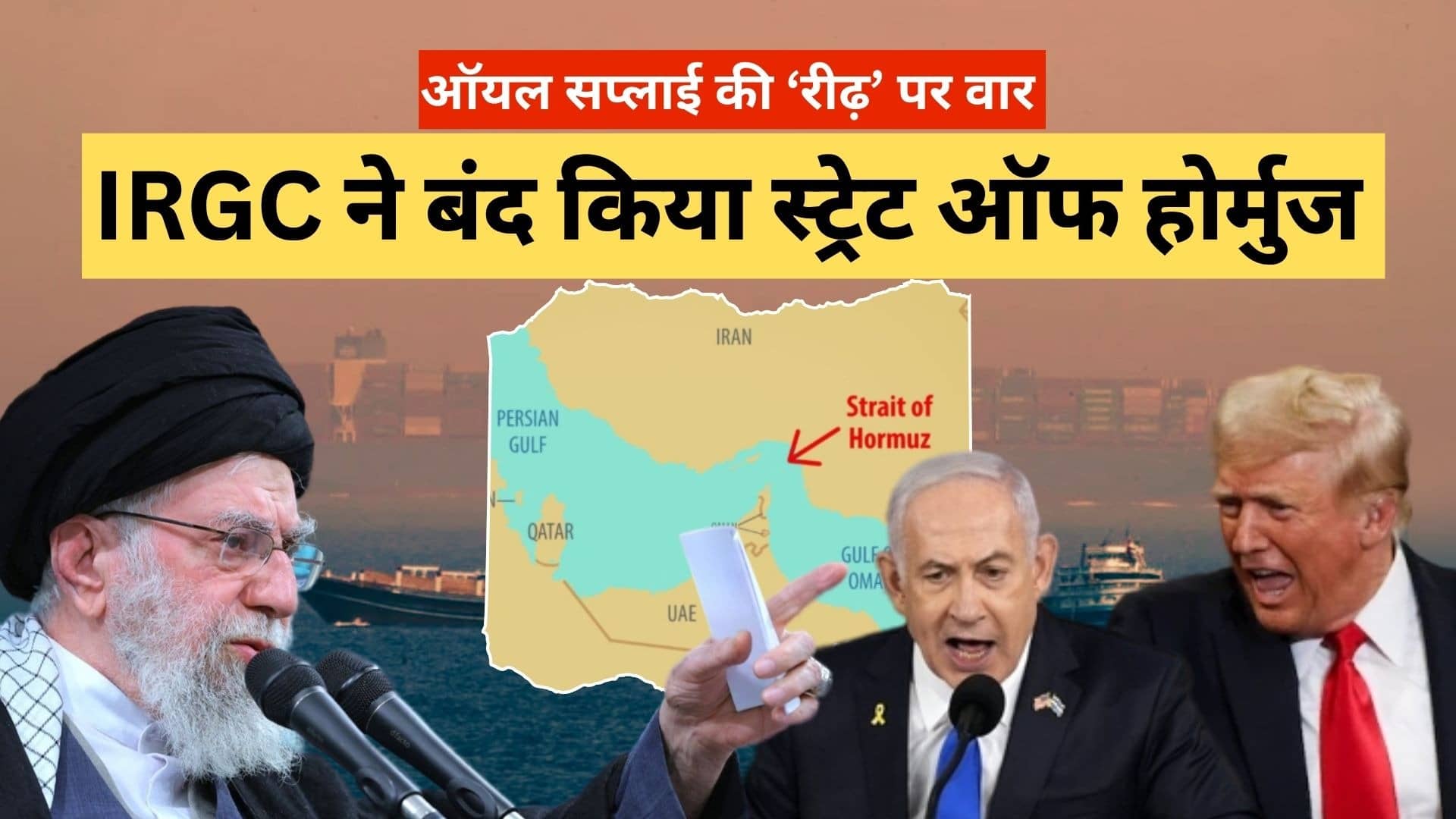
An official with the European Union’s naval mission said Saturday that the ships were receiving VHF transmissions from Iran’s Revolutionary Guards saying no ships were allowed to pass through the Strait of Hormuz.
Let us tell you that this strait is the world’s most important oil export route, which connects the largest Gulf oil producers like Saudi Arabia, Iran, Iraq and the United Arab Emirates to the Gulf of Oman and the Arabian Sea.
Why is the Strait of Hormuz important?
The US Energy Information Administration has described it as the world’s most critical oil transit chokepoint. The Strait of Hormuz, the narrow waterway between Iran and Oman that connects the Persian Gulf to the Gulf of Oman and the Arabian Sea, handles about one-fifth of the world’s liquid petroleum consumption and liquefied natural gas (LNG) trade worldwide. About 15 million barrels of crude oil and 20% of the world’s LNG volume pass through the strait every day.
Higher oil prices are never good news for India, one of the top importers of oil worldwide. India imports about 2 billion barrels of oil every year, so every $1 increase in oil prices could increase the country’s already huge oil import bill by about $2 billion on an annual basis.
Let us tell you that Iran has repeatedly threatened to block the strait and attack tankers passing through it. In addition, there is also a threat of attack on tankers passing through Bab al-Mandeb by Iran’s proxies in Yemen. Bab el-Mandeb is another vital maritime chokepoint in the region, connecting the Red Sea to the Gulf of Aden and the Arabian Sea, and an essential way for global energy flows passing through the Suez Canal.