
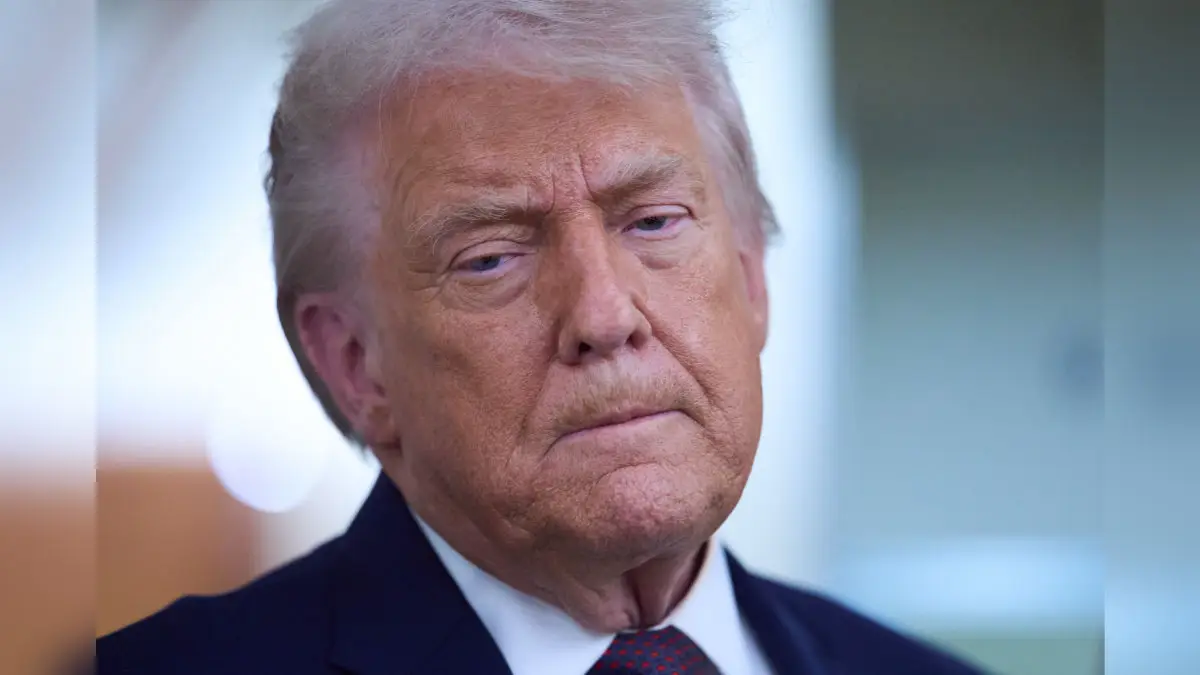
The Supreme Court ruled Friday that President Donald Trump broke federal law by unilaterally imposing massive global tariffs. It is a major blow to the White House on an issue that has been central to the president’s foreign policy and economic agenda.
The conservative-majority high court ruled by a six-to-three majority, saying the International Emergency Economic Powers Act “does not give the President the authority to impose tariffs.”
Let us tell you that after returning to office last year, Trump took the big step of using emergency economic powers to impose huge taxes on almost all American trading partners.
The decision at the Supreme Court was delivered by Chief Justice John Roberts, who was joined by three liberal justices and two fellow conservatives, Justices Neil Gorsuch and Amy Coney Barrett, in the majority.
Roberts wrote, “The President has claimed the power to unilaterally impose tariffs of unlimited amount, duration, and scope. But the Trump Administration does not point to any statute in which Congress has previously stated that the language of the IEEPA may apply to tariffs. Thus, we hold that the IEEPA does not give the President the authority to impose tariffs.”
This decision of the Supreme Court will not affect all of Trump’s tariffs. For example, tariffs imposed on steel and aluminum using different laws will remain the same.
However, this decision of the Supreme Court divides Trump’s tariffs into two categories. One is country-by-country or “reciprocal” tariffs, which range from 34% for China to a 10% baseline for the rest of the world. The second is the 25% tariff that Trump imposed on some goods coming from Canada, China and Mexico. The Trump administration said that they failed to stop the flow of fentanyl. Trump may try to reimpose some tariffs using other laws.