
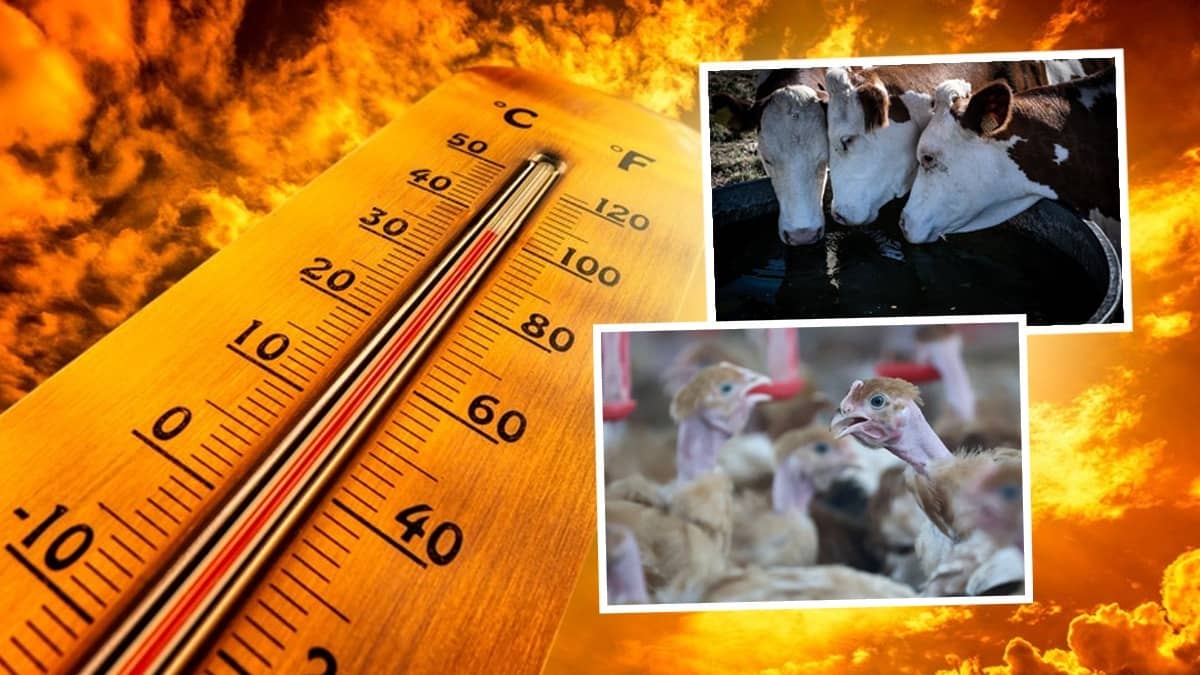
Europe is currently in the grip of record-breaking heat, and its worst impact has been on France’s agriculture and animal husbandry sector. The temperature in France has increased so much that lakhs of chickens have died due to not being able to tolerate the heat. The situation is so serious that the system for removing dead birds has also broken down. According to scientists, global warming and weather events like El Nino are responsible for this dangerous heatwave.
Big blow to poultry farms
Brittany and Pays de la Loire, France’s two largest poultry producing regions, have been hardest hit by this heat. Let us tell you that about 60% of the chickens of France are reared in these two areas. Poultry organizations say that the final figure of deaths is yet to come, but the loss has already run into several lakhs. Local farmers told that whereas on normal days only one or two chickens would die, but due to this extreme heat, hundreds of chickens died within a few days.
Removing dead birds becomes a big challenge
Due to the large number of deaths of chickens, vehicles and services that collect dead birds are not able to reach the farms on time. To deal with this crisis, agricultural organizations have given some important advice to the farmers. Use sawdust temporarily to prevent odor and infection. If the situation worsens, in some areas special permission may be given to bury dead birds near the farm.
Not only chickens, cows too are in trouble
The impact of this deadly heat is not limited to poultry only, but dairy farms have also been badly affected by it. Due to extreme heat, cows have reduced their fodder intake and are drinking more water. As a result, milk production in many farms in France has decreased by 15 to 20 percent. Farmers are continuously running big fans and ventilation systems, but these arrangements are also proving inadequate in the face of the continuously increasing heat.
According to scientists, the reason for excess heat is El Nino. This is a natural phenomenon that occurs in the Pacific Ocean, causing the ocean water to become warmer than normal. This has a direct impact on the world’s temperature. When global warming and El Nino combine, heatwaves become longer and more dangerous than ever before.