
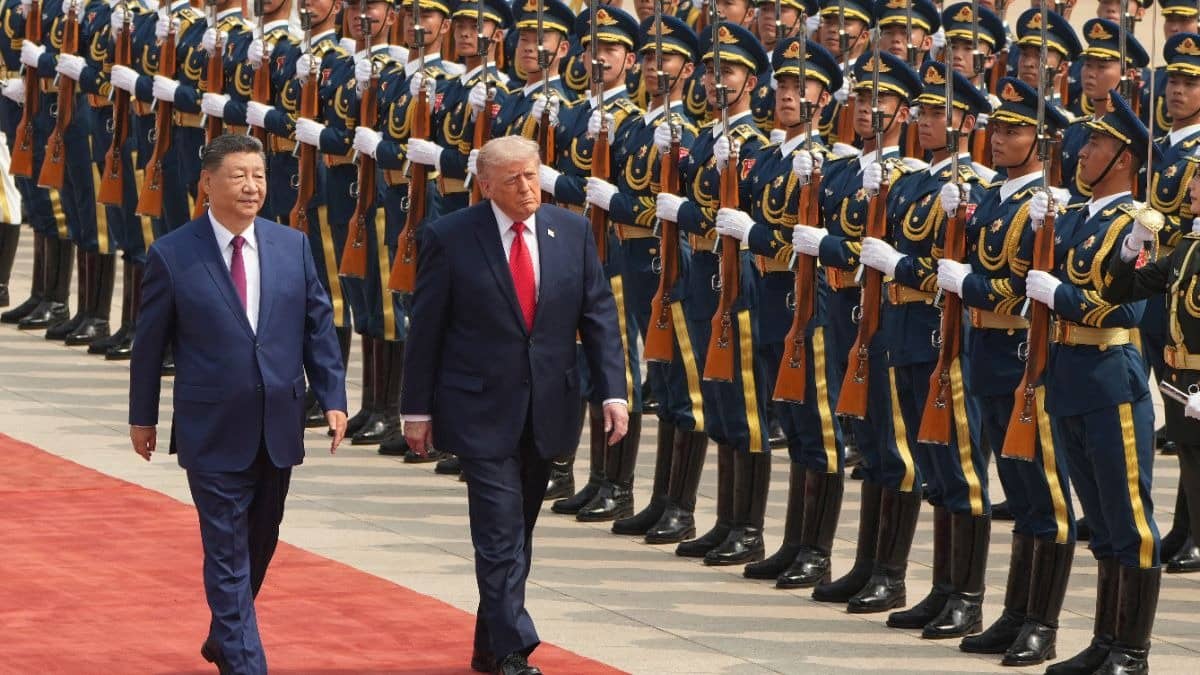
President Donald Trump on Thursday began a summit with Chinese leader Xi Jinping. The conference is expected to be full of pomp and symbolism, but it is unlikely to yield any major breakthroughs on key issues such as trade, US relations with Taiwan or the war in Iran.
Trump was welcomed by Chinese leader Xi Jinping in the ‘Great Hall of the People’. It is a grand building located on Tiananmen Square, where the Parliament of China sits. The two leaders started the meeting by shaking hands and talked for a while; Before posing for photos, Trump also patted Xi on the shoulder.
‘There may be some announcements in the field of trade’
The White House has emphasized that Trump would not have come on this trip unless he expected to achieve some concrete results before returning. This indicates that there may be some announcements in the area of trade, which may include a commitment by China to buy soybeans, beef and aircraft from the US. Trump administration officials also want to work towards setting up a ‘Board of Trade’ with China, so that trade differences between the two countries can be resolved.
But, neither side has yet given any concrete information about the possible outcomes from this three-day visit. This comes at a time when the situation could become even more complicated due to Beijing’s close economic ties with Iran.
Trump has a number of powerful means at his disposal to put pressure on China – including the threat of imposing sanctions on China’s biggest banks, but using these means would cost the United States too much to bear.
Trump aides view Beijing – the biggest buyer of Iranian oil – as one of the few powers that can persuade decision-makers in Tehran to seal a deal with Washington, according to two people familiar with the plans for the meeting. With no concrete means to coerce China, Washington’s objective is to convince China’s leaders that ending the war now is in their own benefit.
However, China also has its own interests. On one hand, he wants to open the Strait of Hormuz, which is blocked by Iran’s military. On the other hand, Iran remains China’s strategic ally in a key region, and acts as a counterbalancing force vis-à-vis the US. And this war – while economically painful for China – has diverted America’s diplomatic and military attention from the Indo-Pacific region. All these things go against Xi’s move to use China’s considerable influence on Iran to try to persuade it to make major concessions.