
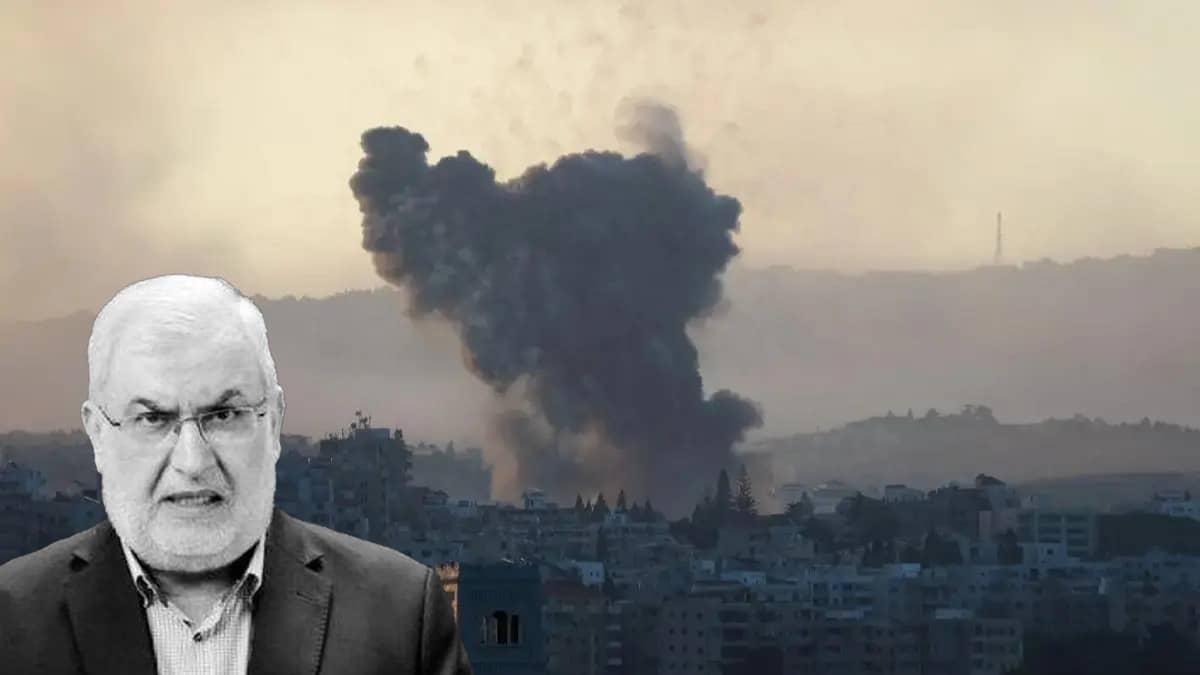
The ongoing war between Iran and Israel has now erupted like wildfire across the Middle East. The situation has worsened after the death of Iran’s Supreme Leader Ayatollah Ali Khamenei in a joint military action by America and Israel. Hezbollah also entered this war. Several air strikes were carried out on the Israeli border from the Lebanese side. In response, Israel struck Lebanon and killed Hezbollah’s top leader Mohammad Raad.
The head of Hezbollah’s parliamentary branch, Mohammad Raad, has been killed in the latest air strikes by the IDF. The Israeli War Room confirmed through a post that Raad, a long-time Hezbollah MP, has been assassinated, although there is no immediate reaction from Lebanon.
Mohammad Raad killed in IDF attack
Responding to the attacks in Lebanon, the IDF fired missiles targeting Hezbollah positions. 31 people are reported to have been killed in the Israeli attacks while 149 people are said to be injured. The IDF reported targeting several Hezbollah fighters in Beirut and southern Lebanon. Mohammed Ra’ad, on the other hand, was seen as a central political figure in Hezbollah’s structure, combining militant operations with parliamentary engagement.
Who was Hezbollah’s top commander Mohammad Raad?
Mohammed Raad, born on 22 August 1955, was one of Hezbollah’s most senior political leaders, heading the group’s political wing in the Lebanese legislature since 2000 and representing the Nabatieh district. Raad has been a well-known voice rejecting demands for Hezbollah’s disarmament and openly criticizing Israeli and Western pressures on Lebanon.
Hezbollah’s leadership has suffered several major defeats in recent years in clashes with Israel, including the 2024 assassination of former Executive Council head Hashim Saffiedine and the wartime death of its longtime leader Hassan Nasrallah, leading to changes in the group’s command structure.
After Khamenei’s death, Hezbollah is burning with revenge
The IDF said it struck several senior Hezbollah militants in Beirut and a central Hezbollah militant in southern Lebanon, but did not confirm the names of the targets. Hezbollah fired rockets at northern Israel and the Carmel region for the first time in 18 months following the death of Iran’s supreme leader, most of which fell in open areas. In response, Israel launched massive air strikes in Beirut and southern Lebanon.