
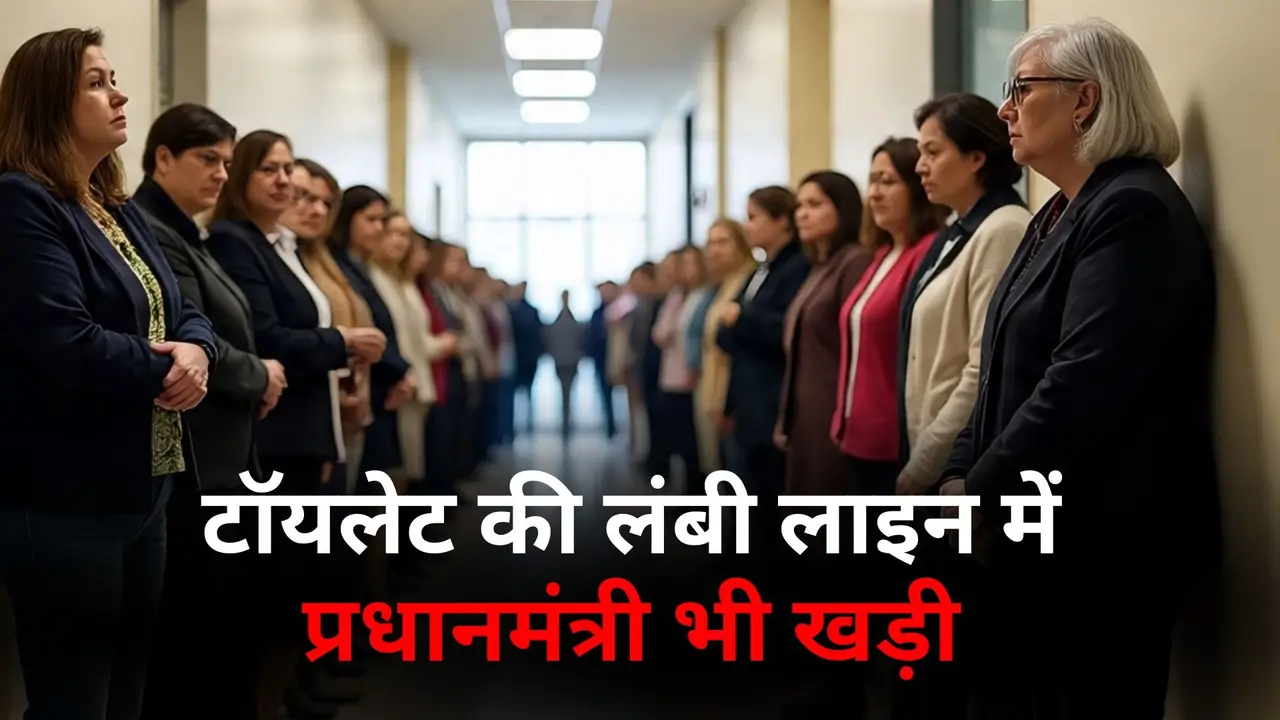
Symbolic picture Image: Freepik/Republic
Japanese Prime Minister Sanae Takaichi has joined a campaign by more than 50 women MPs, who are demanding more women’s toilets in Parliament. He says that due to increase in representation of women, long queues are being formed near the existing toilets.
According to a petition filed by women lawmakers on December 12, there are currently only two toilet stalls for the 73 women lawmakers in Tokyo’s lower house.
The country’s first female leader, Sanae Takaichi, who was elected last year, was among the 58 lawmakers who supported the request. According to the opposition Constitutional Democratic Party, the petition was supported by members of seven parties and independent groups.
Long line in front of women’s toilet
“Before the main session starts, a large number of female lawmakers literally line up in front of the women’s restroom,” said Yasuko Komiyama of the Constitutional Democratic Party.
Let us tell you that Japan remains a culturally conservative country where politics and workplaces have been dominated by old men for years. According to the World Economic Forum’s Global Gender Gap Index, the country ranks 118th out of 148, indicating the need for further changes.
Last year, Takaichi’s historic election took place, and the number of women elected to parliament increased; However, according to a report, women still have less than 16 percent seats in the lower house.
Lack of restrooms is considered an extremely important issue that can affect the conduct of proceedings and the performance of MPs’ duties. In her post, Komiyama stressed that the issue affects not only female lawmakers but also the increasing number of female staffers and female journalists.
73 women in the lower house
According to the Yomiuri Shimbun newspaper, the entire lower house building consists of 12 men’s restrooms with 67 stalls and nine women’s facilities with a total of 22 cubicles.
In elections, women candidates say they often face sexist comments, including that they should take care of children at home. In the last election in 2024, 73 women were elected to the 465-seat lower house, one of whom later resigned, up from 45 in the previous parliament. There are 74 women in the 248-seat upper house. The government’s stated goal is to have at least 30 percent of legislative seats held by women.
Also read: India’s first government supported Bharat Taxi launch, how different from OLA-UBER?